
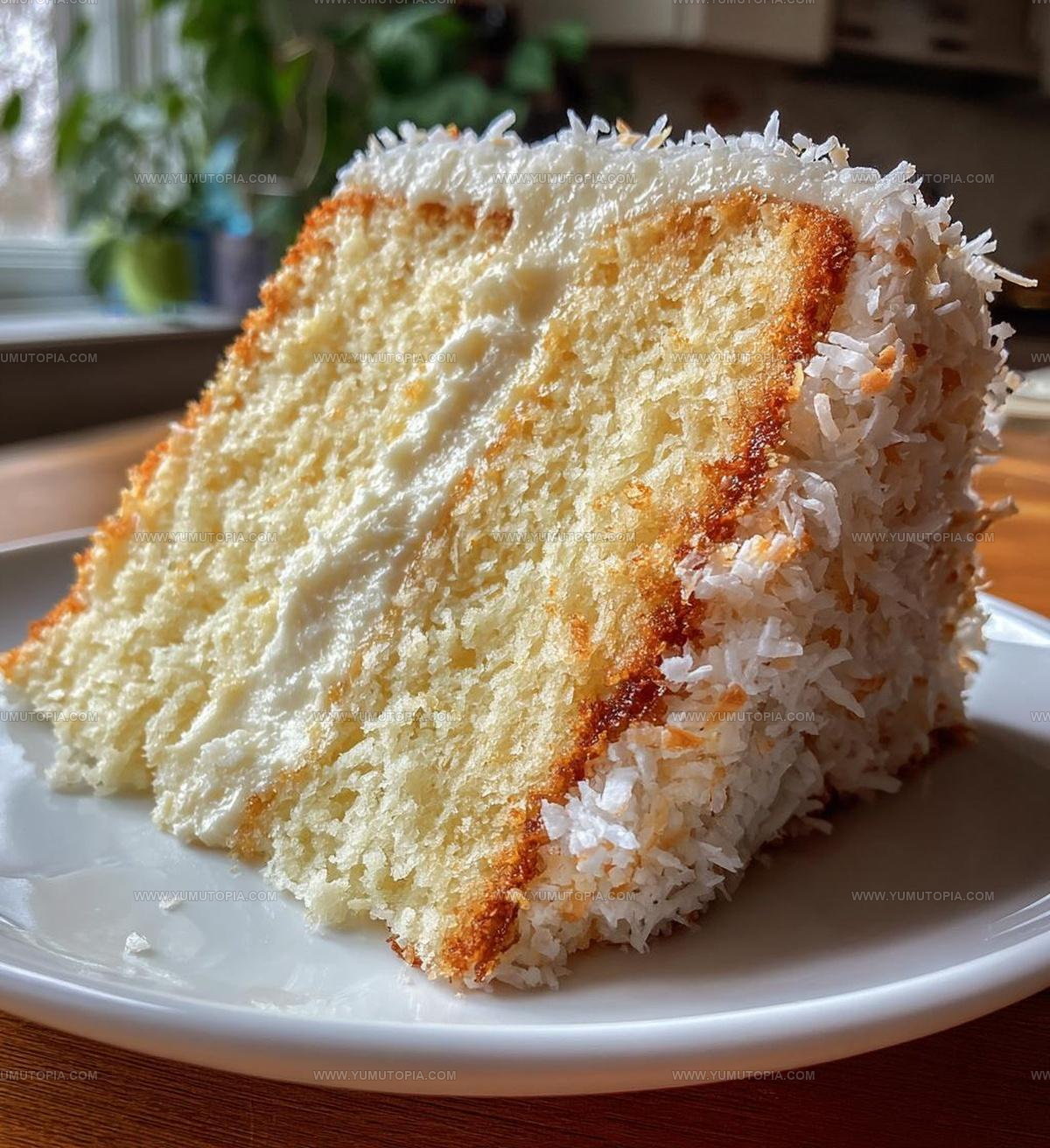
Recipe for Tender Coconut Cake with Tropical Sweetness

Few desserts deliver the tropical sweetness and tender crumb that a moist coconut cake recipe creates to any gathering or quiet afternoon at home.
Coconut lovers know there’s something special about a cake that stays soft and flavorful for days, making it perfect for celebrations or simple weekday treats.
The natural richness creates layers of flavor that feel both comforting and a little bit fancy without requiring advanced baking skills.
Whether served at birthday parties, potlucks, or enjoyed with afternoon coffee, this cake has universal appeal that spans generations and occasions.
Light yet satisfying, it offers the kind of dessert experience that leaves everyone asking for seconds.
You don’t need to wait for a special occasion to enjoy something this delicious and memorable.
Make today the perfect time to bake something truly wonderful.
Highlights of Moist Coconut Cake
Ingredients Used in Moist Coconut Cake
Dry Ingredients:Wet Ingredients:Coconut Addition:What Tools Bake Moist Coconut Cake
How to Bake a Moist Coconut Cake
Warm Up the Oven
Set your oven to exactly 350°F and grab a 9-inch round cake pan. This temperature ensures a perfect bake every time.
Prepare the Cake Pan
Grab some soft butter or cooking spray and thoroughly coat the entire inside of the pan. Sprinkle 2 tablespoons of flour to create a non-stick surface that helps the cake release smoothly.
Mix Dry Ingredients
Take a medium mixing bowl and combine:
Whisk these ingredients together until they’re completely blended.
Blend Wet Ingredients
In a separate large bowl, crack 3 large eggs and add 1 cup granulated sugar. Whisk these together until the mixture becomes light and fluffy, about 2-3 minutes.
Combine Wet Ingredients
Pour into the egg mixture:
Stir everything until well combined and smooth.
Create Cake Batter
Gradually add the dry ingredient mixture to the wet ingredients. Stir gently until the batter becomes completely smooth with no flour lumps.
Add Coconut
Sprinkle 1/2 cup unsweetened shredded coconut into the batter. Fold gently to distribute evenly throughout the mixture.
Prepare for Baking
Transfer the entire batter into your prepared cake pan. Use a spatula to spread it evenly across the surface.
Bake the Cake
Place the pan in the preheated oven and bake for exactly 32 minutes. Check doneness by inserting a toothpick into the center – it should come out clean.
Cool and Serve
Remove the pan from the oven and let the cake rest inside for 10 minutes. Then carefully transfer to a wire cooling rack for another 20 minutes before slicing.
Moist Cake Tips for Coconut Cake
Moist Coconut Cake Variations to Try
Sweet Serving Suggestions for Coconut Cake
How to Store Coconut Cake
Moist Coconut Cake FAQs
Can I use low-fat coconut milk?
Regular coconut milk works best for maximum moisture and rich flavor. Low-fat versions might make the cake less tender.
What if I don’t have a round cake pan?
A square 8-inch pan works perfectly fine. Just adjust baking time by checking doneness with a toothpick.
How do I know the cake is fully mixed?
Stop stirring when no dry flour streaks remain and the batter looks smooth and consistent.
Can I substitute vegetable oil with another fat?
Melted coconut oil or canola oil are excellent replacements that maintain the cake’s texture.
Is fresh or dried shredded coconut better?
Both work great! Dried shredded coconut provides more intense coconut flavor and texture.
Should the eggs be room temperature?
Yes, room temperature eggs blend more evenly and help create a lighter, fluffier cake texture.
Moist Coconut Cake Recipe
- Total Time: 45-50 minutes
- Yield: 8 1x
Description
Coconut cake brings pure sunshine to your dessert table with a delightful blend of tropical flavors and tender crumb. Creamy frosting and sweet coconut flakes make this simple cake a crowd-pleasing treat your family will absolutely adore.
Ingredients
Main Ingredients:
- 3 large eggs
- 1 cup coconut milk
- ½ cup vegetable oil
Supporting Ingredients:
- 2 cups all-purpose flour
- 1 cup granulated sugar
- ½ cup unsweetened shredded coconut
Seasoning and Leavening Agents:
- 2 teaspoons baking powder
- 1 teaspoon vanilla extract
- ½ teaspoon salt
Instructions
- Warm the oven to a precise 350°F, ensuring your rack sits in the center position for even baking.
- Thoroughly coat a 9-inch round cake pan with butter and dust with flour, tapping out any excess to prevent sticking.
- Sift together 2 cups flour, 2 teaspoons baking powder, and ½ teaspoon salt in a medium mixing bowl, creating a light and airy dry ingredient base.
- Grab another bowl and vigorously whisk 3 large eggs with 1 cup sugar until the mixture transforms into a pale, frothy consistency.
- Pour 1 cup coconut milk, ½ cup vegetable oil, and 1 teaspoon vanilla extract into the egg mixture, blending until completely incorporated.
- Gradually introduce the dry ingredient mixture into the wet ingredients, stirring gently to create a smooth, lump-free batter.
- Sprinkle ½ cup shredded coconut into the batter, folding carefully to distribute evenly throughout.
- Transfer the batter into your prepared pan, smoothing the top with a spatula to create an even surface.
- Slide the pan into the preheated oven and bake for 32-35 minutes, checking doneness by inserting a toothpick that should emerge clean and dry.
- Remove the cake and let it rest in the pan for 10 minutes, then carefully release onto a wire cooling rack to prevent continued baking.
Notes
- Coconut quality matters most, so choose fresh, high-fat shredded coconut for maximum flavor and moisture.
- Room temperature ingredients blend more smoothly, helping create a tender cake texture with even mixing.
- For a dairy-free version, substitute coconut milk with almond or oat milk and use refined coconut oil instead of vegetable oil.
- Toasting the shredded coconut before folding into batter adds a deeper, nuttier flavor that elevates the entire cake’s taste profile.
- Prep Time: 15 minutes
- Cook Time: 30-35 minutes
- Category: Cakes
- Method: Baking
- Cuisine: American
Nutrition
- Serving Size: 8
- Calories: 271 kcal
- Sugar: 17 g
- Sodium: 150 mg
- Fat: 15 g
- Saturated Fat: 7 g
- Unsaturated Fat: 8 g
- Trans Fat: 0 g
- Carbohydrates: 29 g
- Fiber: 2 g
- Protein: 4 g
- Cholesterol: 55 mg
Madison Wyman
Recipe Developer & Food Storyteller
Expertise
Recipe Research and Adaptation, Food Writing and Cultural Storytelling, Sustainable and Ethical Sourcing, Dietary Adaptations (e.g., gluten-free, plant-based)
Education
Oregon Health & Science University
Portland Community College
Madison’s passion for flavor and culture ignited amidst the rich Southern cooking traditions of her upbringing, where cherished family recipes told delicious tales.
Armed with a Master’s in Food Systems and Society from Oregon Health & Science University and a Culinary Arts Certificate from Portland Community College, Madison truly excels at transforming rich, intricate flavors into dishes that are both approachable and heartfelt.
For her, cooking is a vibrant blend of science, art, and heritage – a powerful way to connect us to our roots and each other. Her recipes invite you to delve deeper, uncovering the fascinating stories woven into every ingredient.