
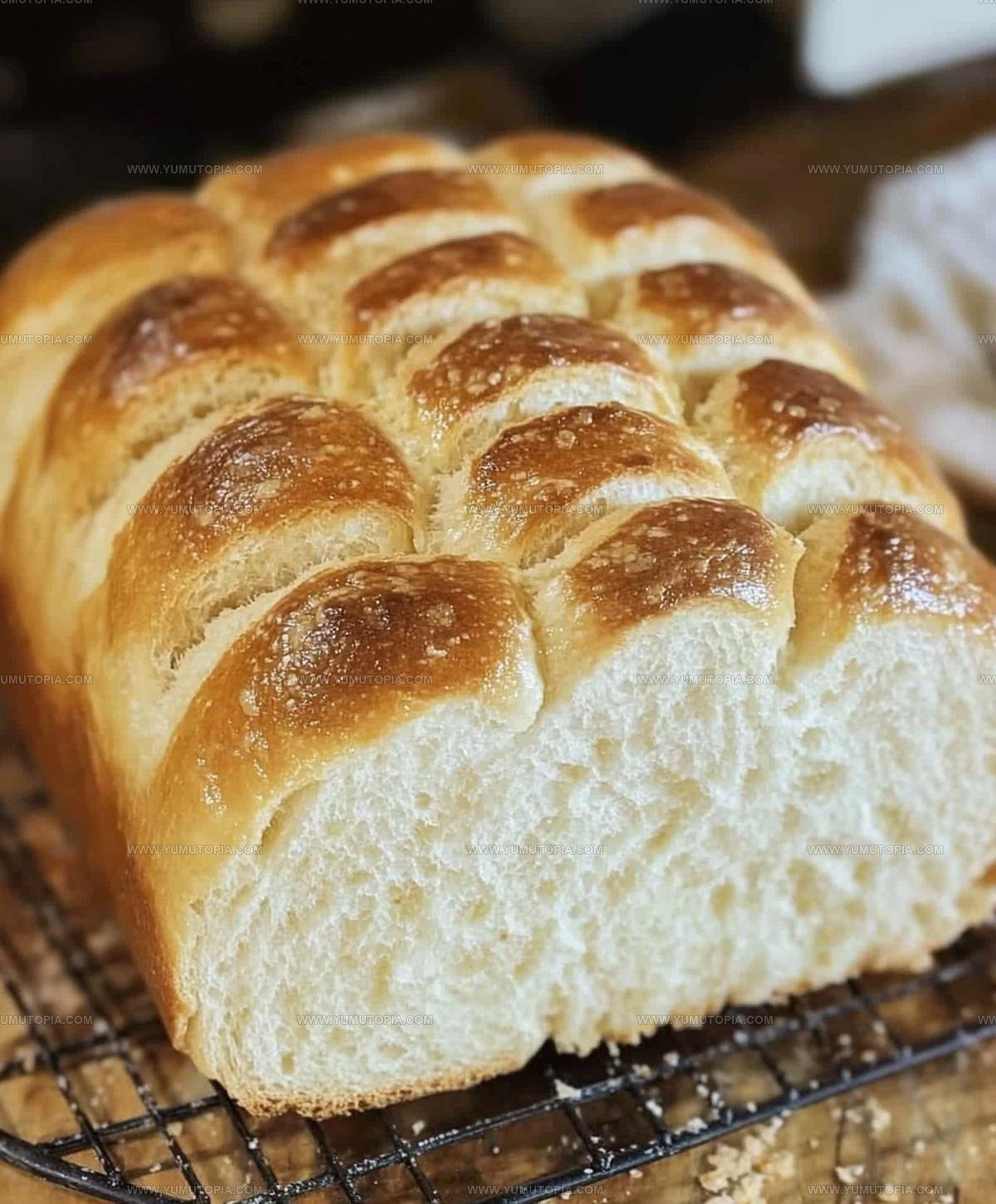
Homemade White Bread Recipe Everyone Can Bake

Simple white bread recipe magic happens when flour, water, and a few pantry basics come together in ways that fill your home with warmth and comfort.
There’s something deeply satisfying about baking bread from scratch, and the results speak for themselves with golden crusts and soft, pillowy interiors.
Homemade loaves have a fresh quality that store-bought versions just can’t match, and the process itself becomes a rewarding ritual.
Perfect for sandwiches, toast, or serving alongside dinner, this classic bake fits seamlessly into daily meals and special occasions alike.
You don’t need fancy equipment or professional skills to achieve bakery-worthy results in a home kitchen.
Each loaf becomes a small celebration of simple pleasures, proving that homemade really does make everything better.
Once the aroma fills the air, everyone gathers around in anticipation of that first warm slice.
Why This Simple White Bread Is Worth Baking Daily
Complete Ingredient List for Simple White Bread
Bread Basics:Flavor Enhancers:Moisture and Binding:Yeast:Best Tools for Simple White Bread
Easy Baking Steps for Simple White Bread
Awaken the Yeast
Grab your measuring cup and pour in 1 cup of lukewarm water. Sprinkle 1 tablespoon of granulated sugar and 2½ teaspoons of dry active yeast into the water. Stir gently and let the mixture hang out for 5 minutes until it gets all bubbly and foamy.
Mix the Dry Ingredients
Grab a medium bowl and toss in:
Whisk these together until they’re well combined.
Create the Dough
Pour the foamy yeast mixture into the flour blend. Stir everything until a shaggy dough forms. Don’t worry about making it perfect – just get everything mixed.
Prepare for Resting
Lightly dust a clean countertop with flour. Plop the dough onto the surface and knead it for about 3-4 minutes until it feels smooth and stretchy.
Oil and Chill
Grab a plastic zip-top bag and drizzle 2 tablespoons of olive oil inside. Roll the dough around to coat it completely with oil. Seal the bag and slide it into the refrigerator. Let the dough rest and develop flavor overnight or up to 3 days.
What Smart Kitchen Notes Perfect White Bread
White Bread Dough Style Variations
Simple Ways to Serve Homemade White Bread
Proper Storage For Homemade White Bread
Simple White Bread Frequently Asked Questions
Can beginners really make this bread?
Absolutely! This recipe is super straightforward and perfect for bread-making newbies. The steps are simple, and you don’t need fancy equipment.
What if my yeast doesn’t foam?
No worries. If your yeast mixture doesn’t get foamy after 5-10 minutes, your yeast might be old. Check the expiration date and use fresh yeast for best results.
How do I know when I’ve kneaded enough?
Your dough should feel smooth and elastic. When you press it, it should bounce back slightly. Stop kneading when the texture feels soft and pliable.
Can I skip the refrigeration step?
The overnight rest helps develop deeper flavor, but if you’re in a hurry, you can let the dough rise at room temperature for about an hour instead.
What type of flour works best?
Bread flour gives the most structure, but all-purpose flour works perfectly fine. Just avoid cake or pastry flour, which are too soft.
Simple White Bread Recipe
- Total Time: 10 minutes
- Yield: 8 1x
Description
Homemade white bread is a game-changer that brings warm comfort straight from your kitchen. Kneading this simple recipe creates fresh, golden loaves that will disappear faster than you can slice them.
Ingredients
Main Ingredients:
- 2½ cups all-purpose flour
- 1 cup lukewarm water
Supporting Ingredients:
- 2 tablespoons olive oil
- 1 tablespoon granulated sugar
- 1 teaspoon salt
Leavening Agent:
- 2½ teaspoons dry active yeast
Instructions
- Pour 1 cup lukewarm water into a measuring cup. Dissolve 1 tablespoon granulated sugar and sprinkle 2½ teaspoons dry active yeast into the water. Watch the mixture bubble and foam for 5 minutes at room temperature.
- Combine 2½ cups all-purpose flour and 1 teaspoon salt in a medium mixing bowl. Create a small well in the center of the dry ingredients.
- Gently pour the activated yeast liquid into the flour mixture. Stir with a wooden spoon until a shaggy dough forms, ensuring all flour is incorporated.
- Transfer the dough onto a lightly floured countertop. Knead the dough for 4-5 minutes, using the heel of your palm to stretch and fold the mixture until it becomes smooth and elastic.
- Drizzle 2 tablespoons olive oil inside a clean plastic zip-top bag. Roll the dough in the oil to completely coat its surface.
- Seal the bag tightly and place the dough in the refrigerator for 12-24 hours to develop deeper flavor and texture.
Notes
- Check water temperature carefully, as too hot water can kill yeast and too cold water won’t activate it properly.
- Kneading develops gluten, so take time to work the dough until it becomes smooth and springs back when pressed.
- Refrigerating overnight allows flavor to develop and makes the dough easier to handle, but let it come to room temperature before baking.
- Brush the top with melted butter after baking for a golden, soft crust that adds extra richness to your homemade bread.
- Prep Time: 10 minutes
- Cook Time: 0 minutes
- Category: Breads
- Method: Baking
- Cuisine: American
Nutrition
- Serving Size: 8
- Calories: 154 kcal
- Sugar: 1.4 g
- Sodium: 190 mg
- Fat: 3.5 g
- Saturated Fat: 0.5 g
- Unsaturated Fat: 3 g
- Trans Fat: 0 g
- Carbohydrates: 27 g
- Fiber: 1.2 g
- Protein: 4.6 g
- Cholesterol: 0 mg
Logan Lemaster
Founder & Culinary Innovator
Expertise
Recipe Development and Innovation, Menu Design and Optimization, Fine Dining Techniques, Ingredient Pairing and Flavor Science
Education
Metropolitan Culinary Arts Institute
Logan’s culinary journey kicked off in his vibrant Chicago family kitchen, where fresh, seasonal ingredients and bold flavors were always front and center.
After graduating from the Metropolitan Culinary Arts Institute in Arlington, Virginia, and honing his skills in renowned restaurants, Logan mastered the art of blending classic techniques with exciting, modern twists.
His kitchen is a dynamic lab for flavor exploration. Through Yum Utopia, Logan aims to empower you to cook with both confidence and creativity, turning simple ingredients into spectacular meals.